Search
-
 Text
TextThe doctrines and discipline of the Methodist Episcopal Church in America
Methodist Episcopal ChurchSummary: -

-
 Text
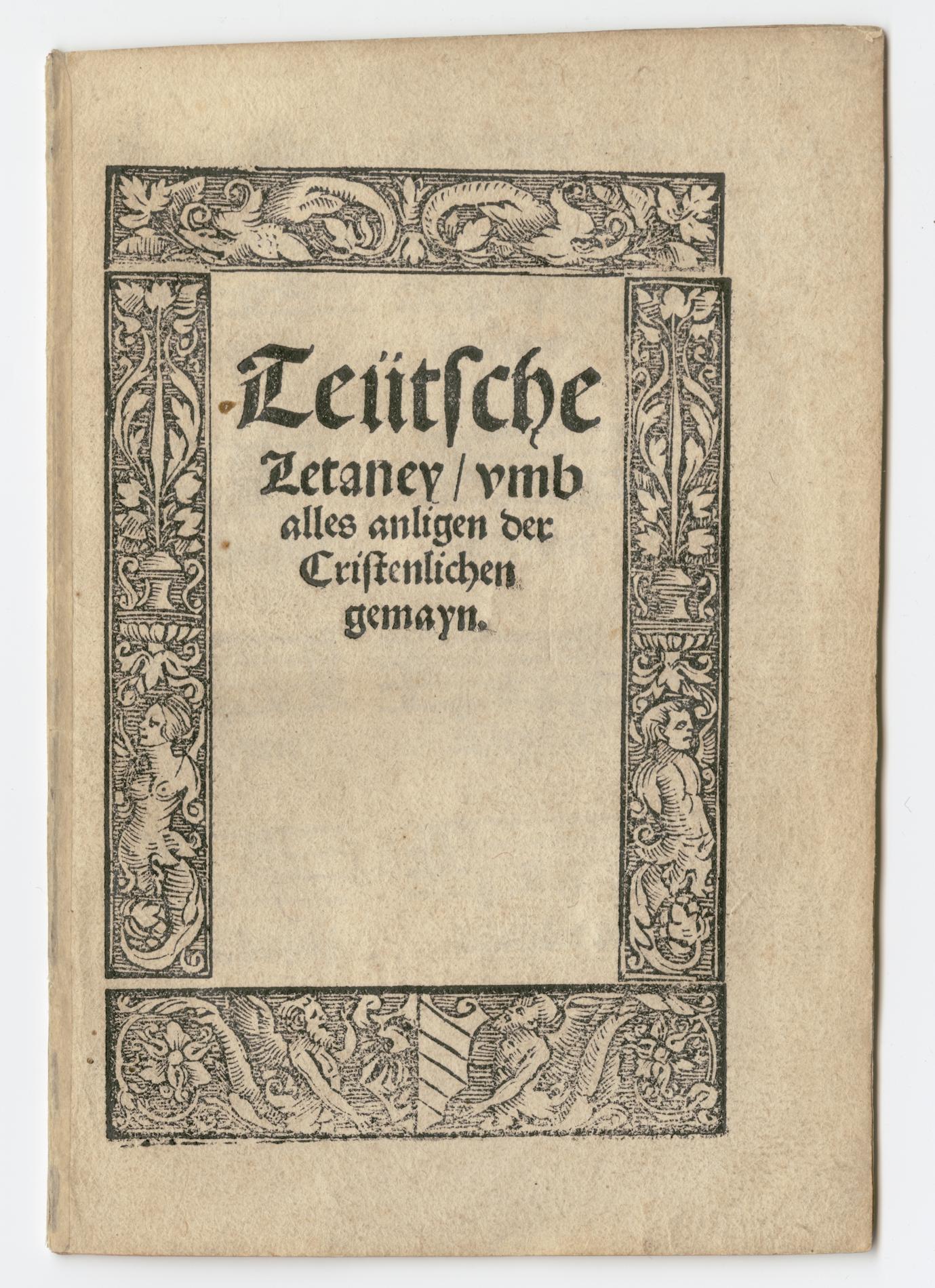
TextTeütsche Letaney, vmb alles anligen der Cristenlichen gemayn
Luther, Martin, 1483-1546Summary: This is Luther's reinstatement of the Litany of "All Saints", containing both the musical notation and German text of the antiphons. -
 Text
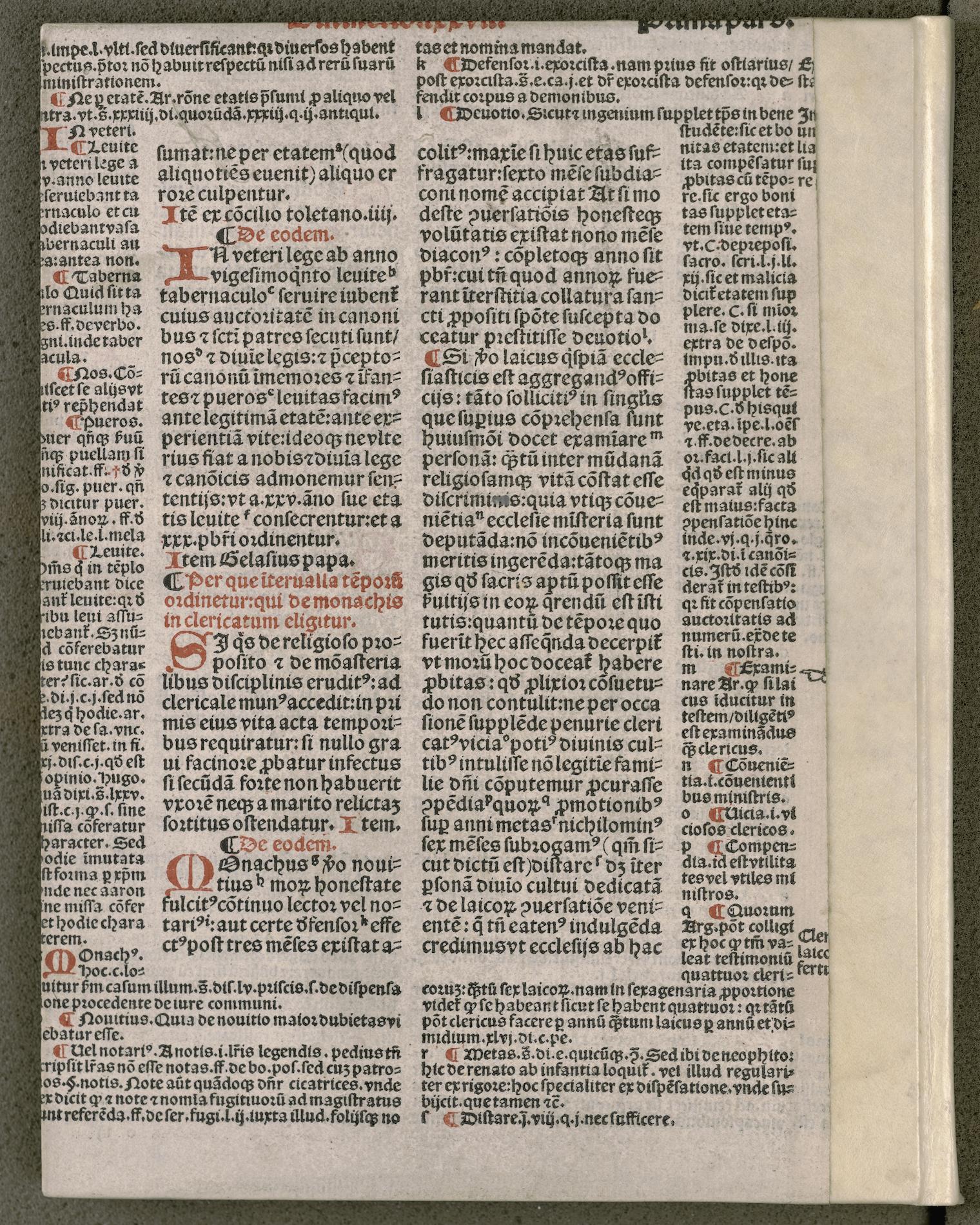
TextChriste[n]lich Antwurt Burgermeisters vnd radts zů Zürich, dem hochwirdigen [et]c. Herren Hugen, Byschoffe zů Costantz, über die vnderricht beyd[er] articklen der Bilder vn[d] der Messz inen zůgeschickt ...
Zurich (Switzerland). StadtratSummary: This is a response, written by Zwingli and adopted by the Council of Zurich, to a warning letter from Hugo von Hohenlandenberg (1457-1532), Bishop of Constance, about the destruction of images (Simulacra) and the reform of the Holy Mass. The bishop argued that the Bible forbade only heathen images; Christian imagery was entirely licit and its use sanctioned by the Council of Nicaea. The book was circulated at the Diet of Lucerne in April 1524 but did not reach Zurich until early June. -
 Text
TextSerenissimi ac potentissimi Regis Anglie, Christiane fidei defensoris inuictissimi, ad illustrissimos ac clarissimos Saxoni[a]e principes, de coercenda abigendaq[ue] Lutherana factione, & Luthero ipso epistola : Item illustrissimi principis Ducis Georgii ad eundem Regem rescriptio
Henry VIII, King of England, 1491-1547Summary: Response by King Henry VIII of England to Luther's attack on his book, "Assertio septem sacramentorum", on the seven sacraments of the Catholic Church. This printing was issued in Leipzig by Hieronymous Emser, early opponent of Luther, with a reply by his ruler, Duke George of Saxony, and dedicated by Emser to Johann von Schleinitz, bishop of Meissen. -
 Text
TextVon der Freyhayt Aines Christen menschen
Luther, Martin, 1483-1546Summary: This is the third of Luther's three great reformation tracts of 1520. Addressed to Pope Leo X, this work is a discourse on the freedom of the will, turning on the paradox: A Christian is free, lord over all things, subject to no one. A Christian is a bounden servant of all, and subject to everyone. This is the fourth printing of Luther's own German translation. -
 Text
TextEin Sermon oder Predig von dem ablasz vnd gnade
Luther, Martin, 1483-1546Summary: An early sermon by Luther on Indulgences and Grace. First appearing in 1518, this work went through fully fourteen printings in that year alone. -
 Text
TextPITTS ZINE (Atlanta, GA)
Miller, ElizabethA guide for incoming and returning students to the services and resources at Pitts Theology Library. This is the inaugural release of the zine, featuring original artwork by Ann McShane and advice gathered from students and library users during the Spring 2023 semester. -
 Still image
The late Revd. John Wesley, M.A. and 446 of the Preachers in his Connexion represented as assembled in City Road Chapel, London
A nineteenth-century lithograph depicting John Wesley preaching at the City Road Chapel in London, addressing the 446 preachers in his connection. The lithograph was produced in the studio of William S. Pendleton (1795-1879) in Boston. Many of the individuals featured in the print are clearly identifiable by their printed engravings from the late eighteenth and early nineteenth centuries. One can quickly identify the familiar faces of Charles Wesley (1707-1788), John William Fletcher (1729-1785), Joseph Benson (1749-1821), and others. -
 Still image
Plate 38: Baalbek, Ruins of the Temple of the Sun & the Temple of Jupiter
Bedford, Francis, 1816-1894The ruins of the Corinthian style colonade of the Temple of Jupiter at Baalbek looking south, with the Temple of Bacchus, mistakenly identified as a temple to Helios, the sun god, in the background. -
 Still image
The Erechtheion, Athens
Bedford, Francis, 1816-1894The Erechtheion as seen looking west. On the left side is the Porch of the Maidens (or Caryatid Porch). -
 Still image
The Parthenon, Athens
Bedford, Francis, 1816-1894The Partheon as seen looking southeast. The Parthenon sits atop the Athenian Acropolis and was dedicated to Athena Parthenos. -
 Still image
The Olympieion and the Acropolis
Bedford, Francis, 1816-1894The remains of the Olympeion, or the Temple of Olympian Zeus, looking northwest towards the Acropolis (background), and the Parthenon. -
 Still image
Mount Lycabettus, Athens
Bedford, Francis, 1816-1894A view across the city of Athens looking northeast towards Mount Lycabettus from the Acropolis. -
 Still image
View of Constantinople from the Beyazit Tower
Bedford, Francis, 1816-1894A view of the Golden Horn (left) and the Bosporus Strait from the top of the Beyazit (Seraskier) Tower. In the center, the Yeni Cami (New Mosque) is visible just to the right of the Galata Bridge. -
 Still image
Fountain of Ahmed III
Bedford, Francis, 1816-1894The Fountain of Ahmed III as seen facing southeast and looking away from the gates of the Topkapı Palace in Constantinople (Istanbul). -
 Still image
Plate 42: Constantinople, Tower of Galata and Portion of a Turkish Cemetery
Bedford, Francis, 1816-1894The Galata Tower seen looking northeast past a burial ground. A portion of the old city wall is visible leading toward the tower on the right. -
 Still image
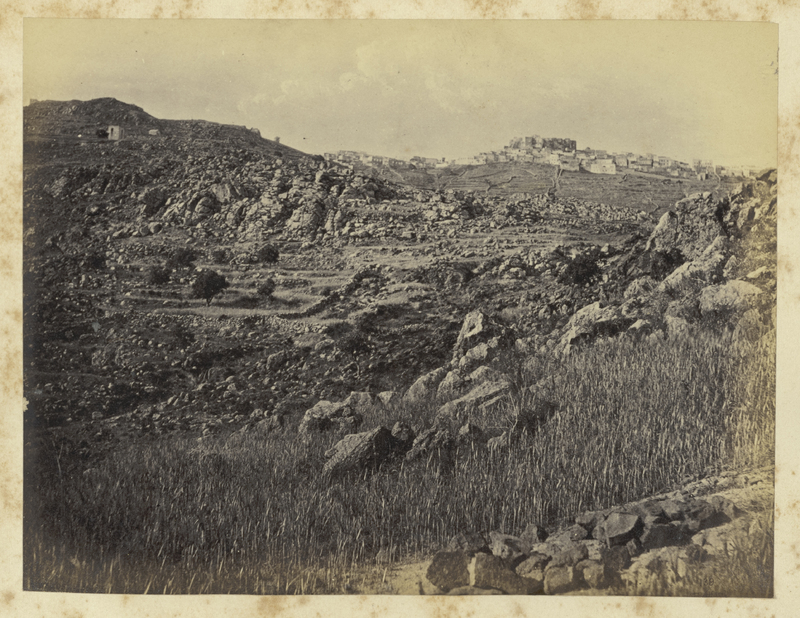
Plate 41: Patmos, The Island and Monastery
Bedford, Francis, 1816-1894A view accross the island of Patmos with the Monastery of St. John the Theologian visible in the upper right. -
 Still image
Plate 40: Lebanon, View of Mount Lebanon taken from above the village of Ehden
Bedford, Francis, 1816-1894Snow-capped Mount Lebanon (background) as seen from across the village of Ehden looking east. -
 Still image
Plate 39: Baalbek, The North Wall of the Interior of the Temple of Jupiter showing the Fluted Columns
Bedford, Francis, 1816-1894The northern interior wall of the Temple of Bacchus, misidentified as the Temple of Jupiter, which shows a colonade of Corinthian style columns incorporated into the wall.

Page 110 of 254
