Search
-
 Text
TextEin Worhafft geschicht wie es kürtzlich einem prediger Münch zuo Nürmberg mit seinen Ordens brüdern von wegen seiner Eua[n]gelischen predig ergangen ist
Korn, GallusSummary: The tribulation of monks-turned Protestant, and then turned out of their monasteries, made fascinating reading for the newly-converted Protestants. In style, it is analogous to martyrologies, such as Foxe's "Book of Martyrs." G. Korn here relates his sufferings on account of the Gospel as one such monk in Nuremberg. -
 Text
TextVo[n] dem elichen sta[n]dt widder Bruder Martin Luter Doctor tzu Witte[n]berg
Alveldt, Augustin von, active 16th centurySummary: This is a copy of A. von Alveld's defense of the Catholic Church's doctrine of clerical celibacy. -
 Text
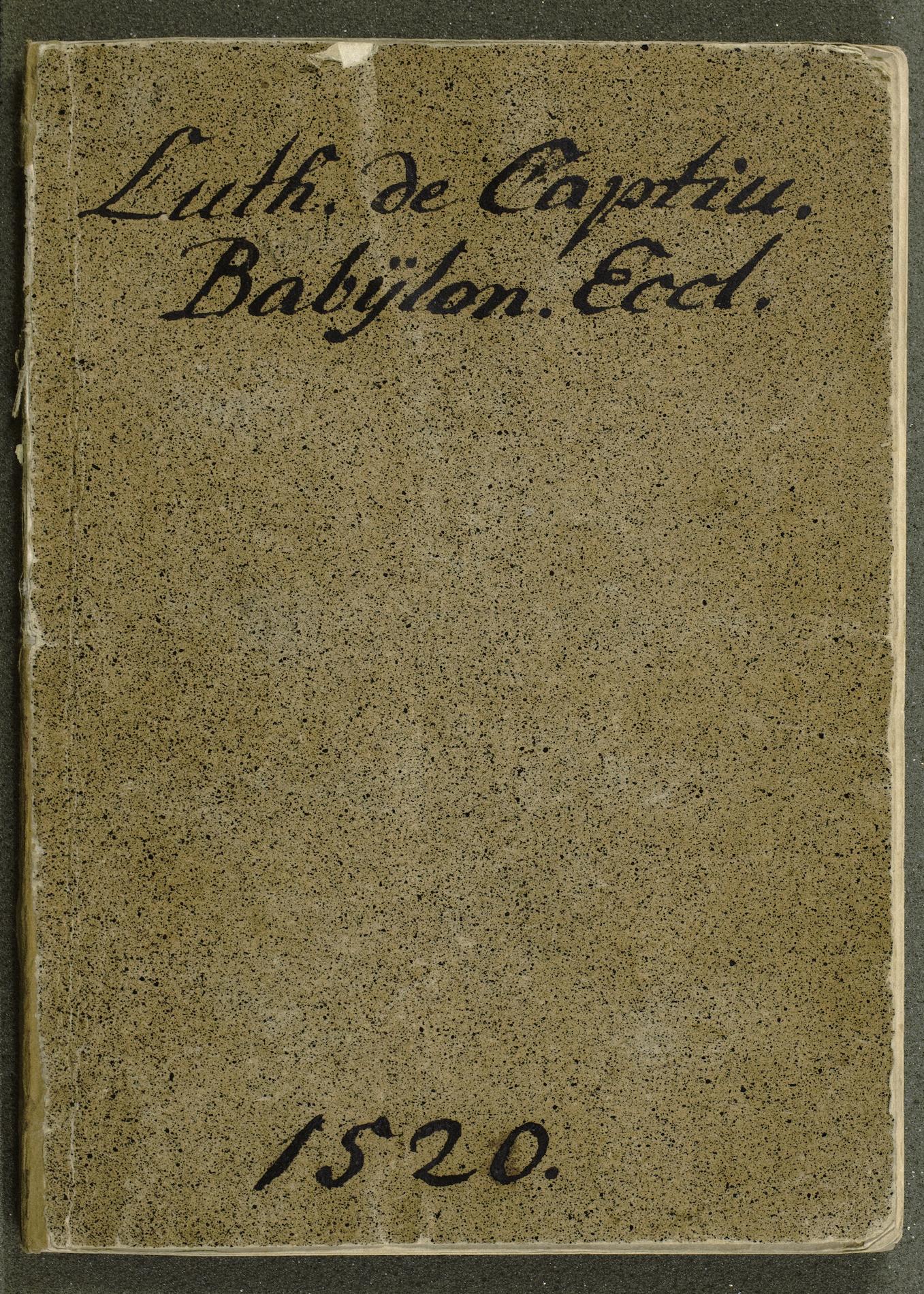
TextAn den Christlichen Adel deutscher Nation : von des Christlichen standes besserung
Luther, Martin, 1483-1546Summary: First edition and first printing of Luther's address "To the Christian nobility of the German nation" is the first of three great Reformation booklets Luther wrote 1520. This piece was completed in August and divided into three parts: (1) an attack on the Papacy and denial of its claims, (2) a list of abuses by the papacy and curia, and (3) a list of necessary reforms. -
-
 Text
TextEyn Sendbrieff an den Bapst Leo den Czehenden
Luther, Martin, 1483-1546Summary: A letter by Luther to Pope Leo X. Leo had issued his famous bull 'Exsurge Domine' on June 15 1520, demanding that Luther recant his teachings of face excommunication. Luther responded with this letter in September, seeking to explain his position, calling for the church to reform, while emphasizing that his critiques have been directed against abuses within the church, not against the person or office of the pope. -
 Text
TextDer .x. gebot ein nutzliche erklerung
Luther, Martin, 1483-1546Summary: Early book on the Ten Commandments and the Seven Deadly Sins by Martin Luther. Originally written in Latin, it is here translated into German by Sebastian Münster, a young Franciscan teacher/scholar, soon to become famous as one of the great Christian Hebraists of his time. This is the first printing of the German translation. -
 Text
TextBvlla decimi Leonis, contra errores Martini Lutheri, & sequacium
Summary: First printing of the first edition of Hutten's edition of the papal bull Exsurge Domine, which condemns as heretical 41 statements by Martin Luther and offers Luther 60 days to recant. Hutten issued the bull with the papal coat of arms on the title page, and offers his own glosses, introduction, and call to Leo to keep his bulls to himself, and not to bother the German Protestants any longer. -
 Text
TextEncomiu[m] Rubij Longipolii apud Lipsim : in errores quos pueriliter co[m]misit adversus Vuittenbergen[ses] : Nemo potest quicquid toto gestatur in orbe rumpere liuores omnia Nemo potest
Montanus, Jacobus, active 1486-1534Summary: It is not certain who wrote this tract on the Leipzig Disputation but J. Montanus or J. Cellarius appear to be the most likely candidates. Montanus became the first Protestant preacher in Westphalia, while Cellarius or Kellner, became the first Protestant Superintendent of Dresden. -
 Text
TextEpistola de Lipsica disputatione
Melanchthon, Philipp, 1497-1560Summary: A report on the Leipzig Disputation of 1519, ostensibly between Karlstadt and Johann Eck, but with the active participation of Luther both in preparation and in delivery. It was at this formal disputation that Eck was successful in pushing Luther to admit that not only popes, but councils, as well, had erred. This was an important point in Eck's favor, since Luther had, up to this point, appealed from the authority of the Pope to that of an ecumenical council. -
 Text
TextEyn Sermon von dem hochwirdigen Sacrament des heyligen waren Leychnamss Christi : Vnd von den Bruderschafften
Luther, Martin, 1483-1546Summary: Second of eleven printings, and the second of two Wittenberg printings with t.p. in red and black, of a sermon by Luther on the Lord's Supper. -
 Text
TextEin Predig von de[m] eelichen Stand
Luther, Martin, 1483-1546Summary: One of several printings of Luther's own revision of a sermon on the subject of marriage, printed without his approval earlier the same year. -
 Text
TextEin Sermon geprediget tzu Leipssgk vffm Schloss am tag Petri vn[d] pauli ym .xviiij. Jar
Luther, Martin, 1483-1546Summary: Sermon preached June 29, 1519, on text: Matthew XVI, 13-19. -
 Text
TextEyn sermon geprediget zu Leyptzigk auff dem Schloss am tag Petri vnnd Pauli im .xix. Jar
Luther, Martin, 1483-1546Summary: Sermon preached June 29, 1519, on text: Matthew XVI, 13-19. -
 Text
TextSermo de penitentia
Luther, Martin, 1483-1546Summary: This sermon on penance was written and preached before Easter, 1518. It is a natural sequel to the sermon on Indulgences and grace, although this sermon was preached first. This is the seventh printing of the sermon. -
 Text
TextResolutio Lutheriana super propositione sua tercia decima de potestate papae
Luther, Martin, 1483-1546Summary: This is the fifth printing of Luther's defense of his thirteenth proposition, on the power of the Pope, prepared for the Leipzig Disputation. -
 Text
TextResolutio lutheriana [sic] super propositione deci[m]a tertia: de potestate pape
Luther, Martin, 1483-1546Summary: One of the thorniest issues raised in the Leipzig Disputation was the historical precedence of papal authority. Eck argued that from earliest times, the authority of the bishop of Rome was accepted by the other bishops. Luther's thirteenth proposition argued that only much later did the church in Rome claim precedence over the other churches. -
 Text
TextAd aegocerotem Emserianum
Luther, Martin, 1483-1546Summary: First edition of Luther's response to Hieronymus Emser's report of the Leipzig Disputation between Martin Luther, Andreas Bodenstein Karlstadt and Johann Eck. Emser, who had been initially sympathetic to Luther's position had accompanied Eck to Leipzig, where he broke with the reformer. In his report, he tried to associate Luther with the Bohemian reformer Jan Hus, who had been burnt at the stake during the Council of Constance in 1415. -
 Text
TextDisputatio et excusatio
Luther, Martin, 1483-1546Summary: A response by Luther to the accusations leveled at him at the Leipzig Disputation by his opponent, Johann Eck. -
 Text
TextResolutiones Lutheriane super propositio[n]ibus suis Lipsie disputatis
Luther, Martin, 1483-1546Summary: An analysis by Luther of the propositions debated by him, his colleague, Andreas Karlstadt, and Johann Eck at the Leipzig Debate of 1519. -
 Text
TextResolutiones Lutherianae super propositionibus suis Lipsiae disputatis
Luther, Martin, 1483-1546Summary: A clarification of Luther's position regarding the Leipzig disputation, a public debate between the Catholic Johann Eck on the one side and Luther and Andreas Karlstadt on the other. The work is preceded by a long letter to Spalatin, dated 15 Aug., 1519. -
 Text
TextResolutio[n]es disputationum
Luther, Martin, 1483-1546Summary: This is Luther's final authorized edition of his Ninety-five Theses in book form with his own commentaries. The edition published by Rhau-Grunemberg had been so full of errors, that Luther gave the printing of this edition to Melchior Lotter in Leipzig.

Page 208 of 254
