Search
-
 Interactive Resource
Center Methodist Church Virtual Space
Roberts, SpencerA 3D rendering of the Center Methodist Church building. -
 Interactive Resource
Beth-Salem Presbyterian Church Virtual Space
Roberts, SpencerA 3D rendering of the Beth-Salem Presbyterian Church building. -
 Interactive Resource
Penfield Presbyterian Church Virtual Space
Roberts, SpencerA 3D rendering of the Penfield Presbyterian Church building. -
 Interactive Resource
Penfield Baptist Church Virtual Space
Roberts, SpencerA 3D rendering of the Penfield Baptist Church building. -
 Text
TextGeorge Whitefield letter to Andrew Linsman ("My Dear Timothy"), April 25, 1769
Whitefield, George, 1714-1770A letter from George Whitefield to Andrew Kinsman, addressed as "My Dear Timothy", requesting a place to stay upon Whitefield's arrival in Plymouth. -
 Text
TextGeorge Whitefield letter to William Lunell, ca. 1768
Whitefield, George, 1714-1770A letter from George Whitefield to William Lunell, a banker, discussing Lunell's marriage and family situation and plans for a future visit. -
 Text
TextGeorge Whitefield letter to "My Dear Professor", July 14, 1767
Whitefield, George, 1714-1770A letter from George Whitefield to a professor discussing the fulfillment of preaching, news from Oxford, thoughts of the education of students of divinity, and a meeting between Whitefield and a mutual acquaintence of the professor. -
 Text
TextGeorge Whitefield letter to Charles Wesley, July 29, 1762
Whitefield, George, 1714-1770A letter from George Whitefield to Charles Wesley discussing Whitefield's travels in the Netherlands, his current tour of central England, and possible plans for travelling to America. -
 Text
TextGeorge Whitefield letter to [Wells], June 10, 1762
Whitefield, George, 1714-1770A letter from George Whitefield to a schoolmaster in Cheltenham discussing the health of a fellow preacher, Mr. Hutchins, and the passing of another, Mr. Jones. -
 Text
TextGeorge Whitefield letter to James Whitefield, April 12, 1759
Whitefield, George, 1714-1770A letter from George Whitefield to his nephew, James Whitefield, updating him on his father, mother, and sister. -
 Text
TextGeorge Whitefield letter to [James Whitefield?], ca. 1759
Whitefield, George, 1714-1770A letter from George Whitefield to his nephew, possibly James Whitefield, asking about his plans to remain in America and recommending some of Whitefield's connections who might be able to help get the nephew settled. -
 Text
TextGeorge Whitefield letter to Walter Peters, October 15, 1758
Whitefield, George, 1714-1770A letter from George Whitefield to Walter Peters in which Whitefield discusses his itinerant preaching near Leeds and plans for future travel. He also mentions an improvement in his health and asks for the continued prayers of his and Peters' friends in Scotland. -
 Text
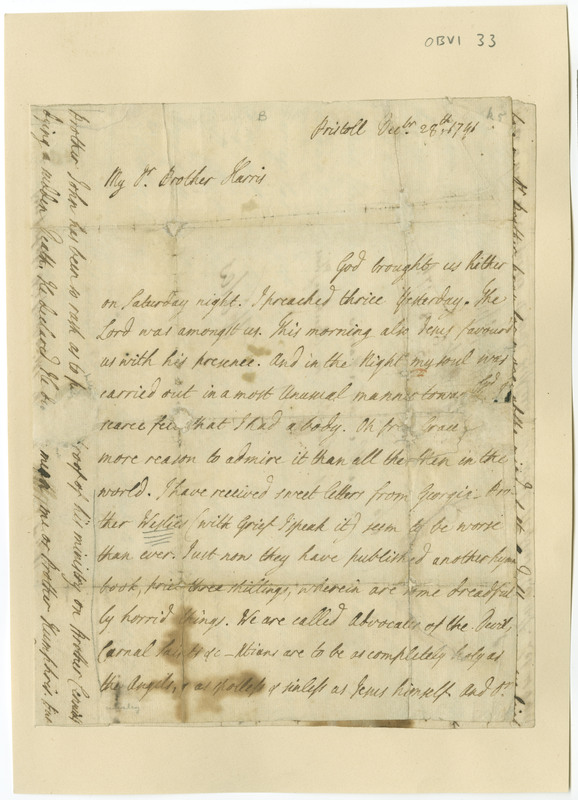
TextGeorge Whitefield letter to Howell Harris, December 28, 1741
Whitefield, George, 1714-1770A letter from George Whitefied to Howell Harris discussing Whitefield's preaching and the recent publication of a book of hymns by the Wesleys. Whitefield also advises Harris to be gentle and kind in his ministering, reminding him that their responsibility is to be shepherds to the flock, not wolves to worry the sheep. -
 Text
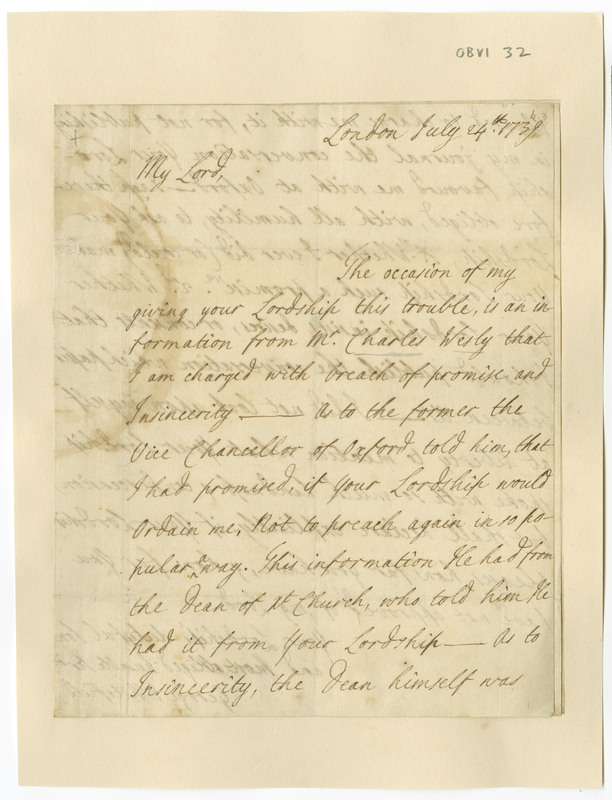
TextGeorge Whitefield letter to Martin Benson, July 24, 1739
Whitefield, George, 1714-1770A letter from George Whitefield to Bishop Martin Benson in response to his implication of Whitefield preaching with "insincerity" and going back on promises made upon ordination. -
 Text
TextMarton Benson letter to George Whitefield, July 3, 1739
Benson, Martin, 1689-1752A letter from Bishop Martin Benson to George Whitefield reminding Whitefield of promises made concerning his conduct when Whitefield was ordained by the Bishop. -
 Text
TextDas Eltern die kinder zuo der Ehe nicht zwinge[n] noch hindern, : Vnd die kinder on der elltern willen sich nicht verloben solle[n]
Luther, Martin, 1483-1546Summary: Parental consent was an issue during the Reformation. Catholic orthodoxy demanded parental consent of the bridal couple as it impacted property. Luther saw value in both sides, arguing that while parents ought not to be able to compel children to marry or prevent weddings, the children ought to seek their parents' consent. -
 Text
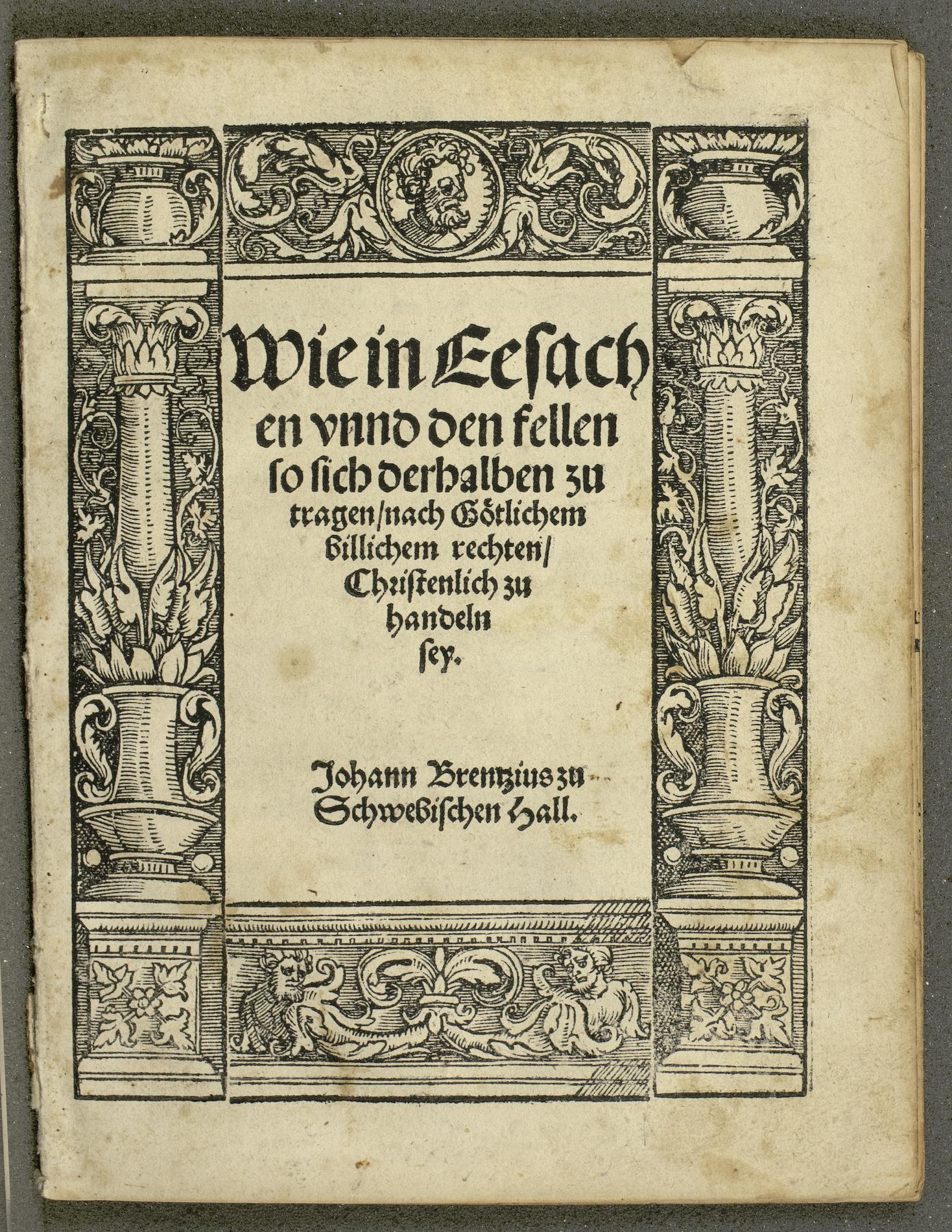
TextWie in Eesachen vnnd den fellen so sich derhalben zutragen, nach Götlichem billichem rechten, Christenlich zu handeln sey
Brenz, Johannes, 1499-1570Summary: In this pamphlet, Johann Brenz, the Lutheran Reformer of South Germany, attacks papal marriage law, and limits the forbidden degrees (marriages) to the narrowest possible interpretation of the Biblical material. -
 Text
TextDas Elltern die Kinder zuo der Ee nicht zwinge[n] noch hindern : Vnd die Kinder on der Elltern willen sich nicht verloben sollen
Luther, Martin, 1483-1546Open letter to Hans Schott, Knight, by Luther on the subject of filial piety in marriage, i.e. to what extent the wishes of the parent must be taken into account in the choice of a life partner. Parental consent was an issue during the Reformation. Catholic orthodoxy demanded parental consent of the bridal couple as it impacted property. Luther saw value in both sides, arguing that while parents ought not to be able to compel children to marry or prevent weddings, the children ought to seek their parents' consent. -
 Text
TextDas Elltern die Kinder zur Ehe nicht zwingen noch hyndern : Vnd die kinder on der elltern willen sich nicht verloben sollen
Luther, Martin, 1483-1546Parental consent was an issue during the Reformation. Catholic orthodoxy demanded parental consent of the bridal couple as it impacted property. Luther saw value in both sides, arguing that while parents ought not to be able to compel children to marry or prevent weddings, the children ought to seek their parents' consent. -
 Text
TextDas Ellternn die Kinder zůr Ehe nicht zwinge[n] nach hindern vnd die Kinder on der Elltern willen sich nicht verloben sollenn
Luther, Martin, 1483-1546Summary: Parental consent was an issue during the Reformation. Catholic orthodoxy demanded parental consent of the bridal couple as it impacted property. Luther saw value in both sides, arguing that while parents ought not to be able to compel children to marry or prevent weddings, the children ought to seek their parents' consent. -
 Text
TextWie syben Weyber vber jhre vngeratene Menner klagen
Sachs, Hans, 1494-1576Satirical poem by the Nuremberg Meistersinger and cobbler about seven women complaining about their wayward husbands. The piece was originally published as a broadside in 1531 (cf. Erdmann) and is the counterpart to another poem by Sachs about seven men complaining about their wives.

Page 224 of 254
