Search
-
 Text
TextSendtbrieff an Pfarrer von Hohensynn. Doctor Martini Luthers Leer betreffende. Oder einem Jede[n] Prelatischen Pfarrer Seynes vaterlandes.
Summary: This is a Catholic pamphlet warning against Luther's errors. "Pastor Highmind" may be pseudonym or the name of a real Pastor von Hohensynn. -
 Text
TextEin Sermon
Alveldt, Augustin von, active 16th centurySummary: Augustinus Alveldt, a Franciscan teacher, and later provincial head of the order, here responds to Luther's tract, "Von dem Papsttum zu Rom," in which Luther explains his views on the Papacy. -
 Text
TextDe disputatione lipsicensi quantum ad Boemos obiter deflexa est Epistola
Emser, Hieronymus, 1478-1527Summary: This volume includes both Emser's letter on the Leipzig Disputation, and Luther's sharp reply. Luther and Emser became lifelong enemies, a situation only exacerbated by Emser's use of Luther's New Testament as a basis for his own German translation in which he attacks Luther and Lutheranism. The woodcut on the title page shows Emser's coat-of-arms with the prominent goat, which gave Luther the title of his work, "To the Goat in Leipzig." The manuscript note on the title page says the book was purchased in 1520. -
 Text
TextAd criminatricem Martini Luders Uitte[n]bergen[sis] offensione[m] super iudicio iustissimo facto : ad articulos quosdam per minoritas de obserua[n]tia Reuere[n]dissimo Episcopo Brandenburgen[si] oblatos Eckiana responsio; Quia hactenus abusus est Mar. Luderus modestia Eckiana : tande[m] extorsit, vt mordaci, mordaciter quo[que] responderem ...
Eck, Johann, 1486-1543Summary: Johann Eck responds in this early work to Luther's pamphlet "Contra malignum Iohannis Eccii iudicium." -
 Text
TextExcusatio eckij : ad ea que falso sibi Philippus Melanchton gra[m]maticus Vuittenbergen[sis] super theologica disputatione lipsica adscripsit.
Eck, Johann, 1486-1543Summary: The participants in the Leipzig Disputation promised not to print their positions before the faculties of Paris and Louvain had issued their verdicts in the case. Both sides broke their promise. Melanchthon apparently got into print first, for this is Eck's reply to Melanchthon. This is the second printing of the work. -
 Text
TextJoannis Eckij pro Hieronymo Emser : contra malesanam Luteri venationem responsio, Soli Deo gloria.
Eck, Johann, 1486-1543Summary: First printing of the first edition of a pamphlet by Johann Eck in support of Hieronymus Emser, a theologian in Leipzig and one of Luther's most vehement early opponents. -
 Text
TextReplica F. Sylvestri Prieriat[is] : sacri Palatii Apostolici Magistri, ad F. Martinum Luther Ordinis Eremitaru[m] ; Martinus Luther, optimo lectori salutem ...
Mazzolini, Silvestro, da Prierio, 1456?-1527?Summary: When Luther received the replies of S. Mazzolini, the first man to take up the cudgels against Luther, he found the best course of reply to be a reprinting with notes of Mazzolini's inept rejoinders. Even the Catholics had to admit that Mazzolini's answers simply did not meet Luther's objections. This is the second printing of the work. -
 Text
TextJournal of Biblical Literature, March 1958
Society of Biblical Literature and Exegesis (U.S.)Front matter and proceedings from volume 77, part 1 of the Journal of Biblical Literature. -
 Still image
The Martyrdom of Saint Catherine
Dürer, Albrecht, 1471-1528A depiction of the martyrdom of Saint Catherine of Alexandria. -
 Still image
The Crucifixion
Dürer, Albrecht, 1471-1528A depiction of the crucifixion including Mary in the foreground and angels collecting the blood of Christ. The leaf includes descriptive text on the verso in Latin. -
 Still image
Der ungläubige Thomas
Dürer, Albrecht, 1471-1528Thomas touches the pierced side of Jesus while the apostles gather around. -
 Still image
Christus in Emaus
Dürer, Albrecht, 1471-1528Albrecht Dürer's woodcut presents Christ seated at the table in Emmaus with the two disciples from the road and two hosts. Christ breaks the bread and thus this image captures the moment just prior to his disappearance from their sight. -
 Still image
Die Auferstehung
Dürer, Albrecht, 1471-1528Dürer's depiction of the resurrection of Christ focuses on Matthew's account: Christ emerges from the tomb while the guards shook in fear and became as dead men. -
 Still image
Die Dornenkrönung
Dürer, Albrecht, 1471-1528Christ is seated while the guards beat him and apply a crown of thorns to his head, while the Jewish leader look on from the left. -
 Still image
Die Fußwaschung
Dürer, Albrecht, 1471-1528Jesus washes Peter's feet in the foreground while in the background the rest of the apostles are contemplating this event. -
 Text
TextRoll Book (members in full connection)
Methodist Episcopal Church. Georgia ConferenceA roll book with rosters of active members (by year) of the Georgia Conference of the Methodisc Episcopal Church. -
 Text
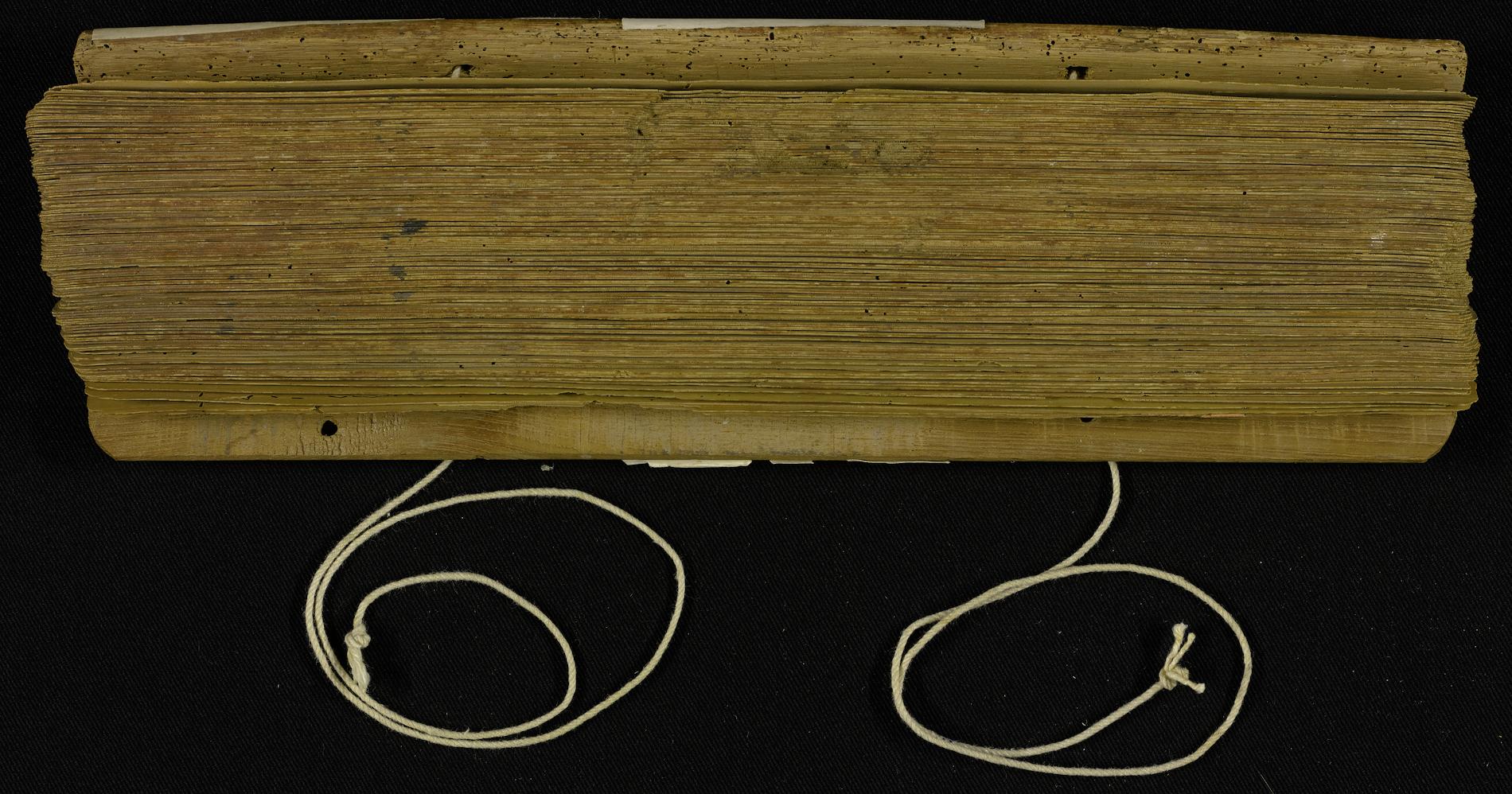
TextTelugu Mahābhārata. Udyōga Parva
Vīrarāghavakavi, Kōṭikalapūḍi, 1663-1712This work was written on a palm-leaf manuscript (dried palm leaves were used as a medium for writing in South Asia). There is a total of 143 palm leaves in the manuscript. Each leaf is roughly 35mm x 430mm and is inscribed on both sides. There are also two holes in each leaf and the leaves are bound together with a cord running through the two holes and the whole manuscript is encased with wooden ends. Rounded scripts (such as Telugu) were used on palm-leaf manuscripts because angular letters split the leaves. -
 Text
TextNorth Dutch Book of Hours
Catholic ChurchUsed at Utrecht between 1470 and 1500, the North Dutch Book of Hours includes the "Hours of the Eternal Wisdom," by Gerard Groot (a member of the Brothers of the Common Life), Hours of the Virgin, and Penitential Psalms. -
 Still image
Africa including the latest discoveries
Hall, SidneyA map of Africa depicting locations explored by Europeans up to the early 19th century, including the Sahara, Madagascar, and the Ivory Coast. -
 Text
TextAlbertus Dei et Apostolice Sedis gratia Maguntinen[sis] [sic] et Magdeburgen[sis] Archiepiscop[us] ac Halberstaten[sis] ecclesiar[m] Administrator, Germanie Primas ... Indulgence
Albert, of Brandenburg, Archbishop and Elector of Mainz, Cardinal, 1490-1545Indulgences were issued to defray the cost of building the basilica of St. Peter in Rome. Their distribution was often linked to the sacrament of penance, as believers were granted spiritual merits in exchange for financial donations. This particular indulgence, believed to be the only specimen of its kind thus far recovered, was issued specifically to clergy, granting them liturgical benefits in exchange for their contributions. -
 Text
TextHiroshima, August 6, 1945, 8:15 a.m.
Tanimoto, Kiyoshi, 1909-1986An address given by the Rev. Kiyoshi Tanimono, Methodist minister, during Minister's Week at Emory University giving an eye-witness account of the bombing of Hiroshima on August 6, 1945.

Page 236 of 254
