Search
-
 Text
TextDe origine et autoritate Verbi Dei, et quae pontificum, patrum, et concilioru[m] sit autoritas admonitio, hoc tempore, quo iterum de concilio congregando agitur, ualde necessaria : recongnita [sic] et aucta additus est catalogus doctorum ecclesiae Dei, à mundi initio, usque ad haec tempora
Major, Georg, 1502-1574Summary: Tract on the history of Divine Revelation, tracing the teachers of the church from the Creation to the author's own time, by Georg Major, a student of Luther and Melanchthon, and professor at Wittenberg from 1536, with a few brief interruptions, until his death. -
 Text
TextDe Libero arbitrio ΔΙΑΤΡΙΒΗ, sive collatio
Erasmus, Desiderius, -1536Summary: Early edition of Erasmus' treatise on free human will and its limits. -
 Text
TextDe dialectica libri quatuor recogniti. Anno. XXXIIII
Melanchthon, Philipp, 1497-1560Summary: Melanchthon wrote three versions of his book on dialectic, considering only the third to be truly successful. This is a printing from 1534 of the second (1528) version. -
 Text
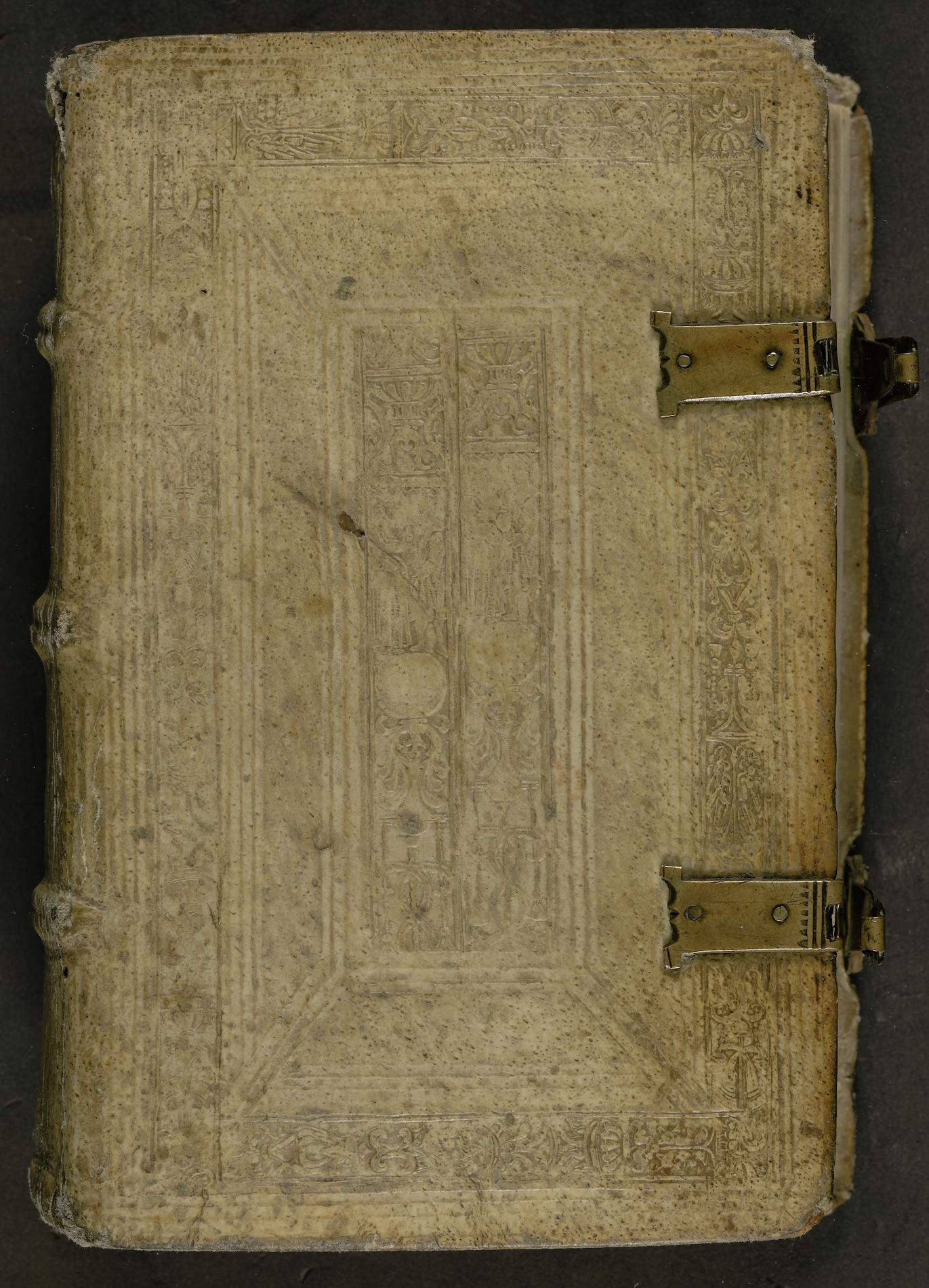
TextDas Jhesus Nazarenus der ware Messias sey : Derhalben die Juden auff kaynen andern warten dörffen
Samuel, MarochitanusSummary: German translation by Wenzeslaus Linck of Epistola contra Judaeorum, thought to be written in Arabic by Samuel of Marocco, an apostate Jew at the beginning of the 11th century and translated into Latin by the Spanish Dominican Alphonsus Bonihominis in the 14th century and widely disseminated. Bonihominis is likely the real author of the work. -
 Text
TextDas Buch Judith. : zu Wittemberg verdeudscht
Summary: The Book of Judith was probably written between 175 and 125 B.C. and is part of the literature known as the Apocrypha, composed between the Old and New Testament eras. The Catholic Church accepted the Apocrypha as canonical while Luther did not. The story is of the pious widow Judith who beheads the enemy general Holofernes after he has become drunk. It is reminiscent of Jael's killing of Sisera in Judges 4. This is apparently the only separate printing of this translation, issued the same year as the complete German Bible. -
 Text
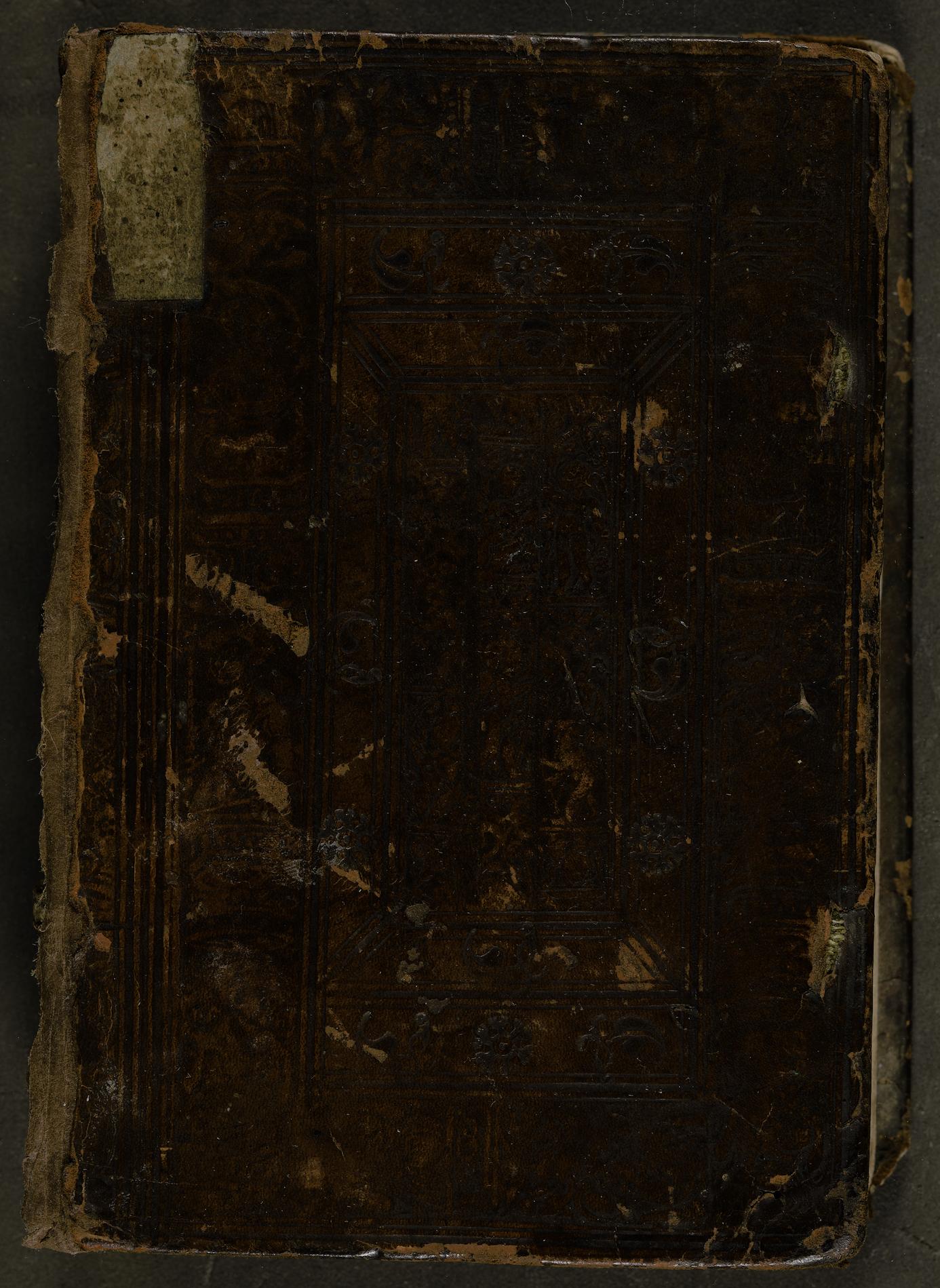
TextContra haereticum dikaeusistam de dicto Ioannis: Spiritus arguet munde iustitia uado ad Patrem
Flacius Illyricus, Matthias, 1520-1575Summary: Response by Mathias Flacius Illyricus, among the strictest of the Lutheran theologians of his time, to the views of the early Reformer of Nürnberg, Andreas Osiander, on Justification. Osiander emphasized the believer's being made righteous, as opposed to being declared righteous through Christ. Flacius reports on the title page that he had shared his views on this issue privately in writing with friends, but that they had been published without his permission and in a form unacceptable to him. This edition represents the official response by Flacius. -
 Text
TextConfession des durchleüchtigen, hochgebornnen Fürsten vnd Herrn, Herrn Christoffs Hertzogen zů Wirtemberg, vnd zů Teckh, Grauen zů Mümppelgart, [et]c. so jr F.G. auff den XXIIII. Januarij, Anno M. D. LII. dem versamelten Concilio zů Triendt durch jhrer F. G. gesandten überantwort
Summary: A 1553 printing of the Württemberg Confession, commissioned by Duke Christoph, drafted by Johannes Brenz in 1551 and signed by other Swabian theologians to be presented at the council of Trent in 1552. -
 Text
TextCommonefactio De periculis horum temporum : proposita scholasticis Academiae Vuitebergensis, XII. Cal. IXbris, Anno M.D.LXV. Rectore Micaelo Teubero , I.V. doctore
Peucer, Kaspar, 1525-1602Summary: Lecture delivered to the faculty and students of the University of Wittenberg on "the perils of these times" by Kaspar Peucer, Philipp Melanchthon's son-in-law. The perils to which he refers are the military threat of the Turks to the east, and the plague. -
 Text
TextCollatio de opinione D. Eberi, de specie Indignorum, qui in actionae coenae sacra, corpus & sanguinem Christi non accipiunt
Wigand, Johann, 1523-1587Summary: Compilation by Johann Wigand of arguments made by the Reformer Paul Eber in support of the real presence of Christ in the eucharist. -
 Text
TextCatechistica summula religionis Christianae
Heyden, Sebald, -1561Summary: Summary-style Lutheran catechism by Sebald Heyden, a humanist scholar and educator in Nuremberg. He was well known as a poet and composer of hymns and his book "De arte candendi" (On the art of singing) had a significant impact on the study and teaching of music. -
 Text
TextCatechismus minor puerorum, generoso puero Ottoni Fürster
Rhegius, Urbanus, 1489-1541Summary: Rhegius was a Reformer, active throughout Germany promoting Lutheran unity in the Holy Roman Empire. In 1530 at the Diet of Augsburg he was befriended by Ernest I, Duke of Brunswick-Luneburg, under whose patronage he returned to Brunswick where he wrote the present work for Ernest's son, Francis Otto (1530-1559). Like many 16th c. catechisms, Rhegius' is in the form of a dialogue, in this instance between the teacher and the pupil (paedagogus et discipulus). -
 Text
TextCatechismus
Brenz, Johannes, 1499-1570Summary: Johannes Brenz had written the first Protestant catechism in 1527, two years before Luther issued his large and small catechisms. This is a 1552 printing of the work. -
 Text
TextCatechesis Dauidis Chytraei recens recognita, et multis definitionibus aucta
Chytraeus, David, 1531-1600Summary: Catechism by David Chytraeus, a student of Philipp Melanchthon's. -
 Text
TextCantio de papa romanaque ecclesia, per Boemum quendam ante annos circiter 100 composita, secundum ordinem alphabeti
Summary: Satirical song about the office of the Pope, composed anonymously in response to the execution of Jan Hus in 1415 and published by Matthias Flacius to underscore his opposition to the Catholic Church in all matters following the Interim of Augsburg in 1548. -
 Text
TextBrevis comprehensio argumentorum, quibis seruitus ferenda in caeremonijs a papistis per eorum ministros imposita improbatur
Westphal, Joachim, 1510 or 1511-1574Summary: Joachim Westphal was a gnesio-Lutheran theologian and Superintendent in Hamburg. A major opponent of the Interims of Augsburg and Leipzig, he argued that Catholic liturgical practices were not adiaphora (morally indifferent acts that were either required nor prohibited), but needed to be rejected completely. -
 Text
TextBreuissima maximque compendiaria consiciendaru[m] epistolarum formula
Erasmus, Desiderius, -1536Summary: A short tract by Erasmus on the composition of letters. -
 Text
TextBreuis et pia explicatio in librum Josuae
Brenz, Johannes, 1499-1570Summary: Johannes Brenz's commentary on the book of Joshua, first published in 1549. -
 Text
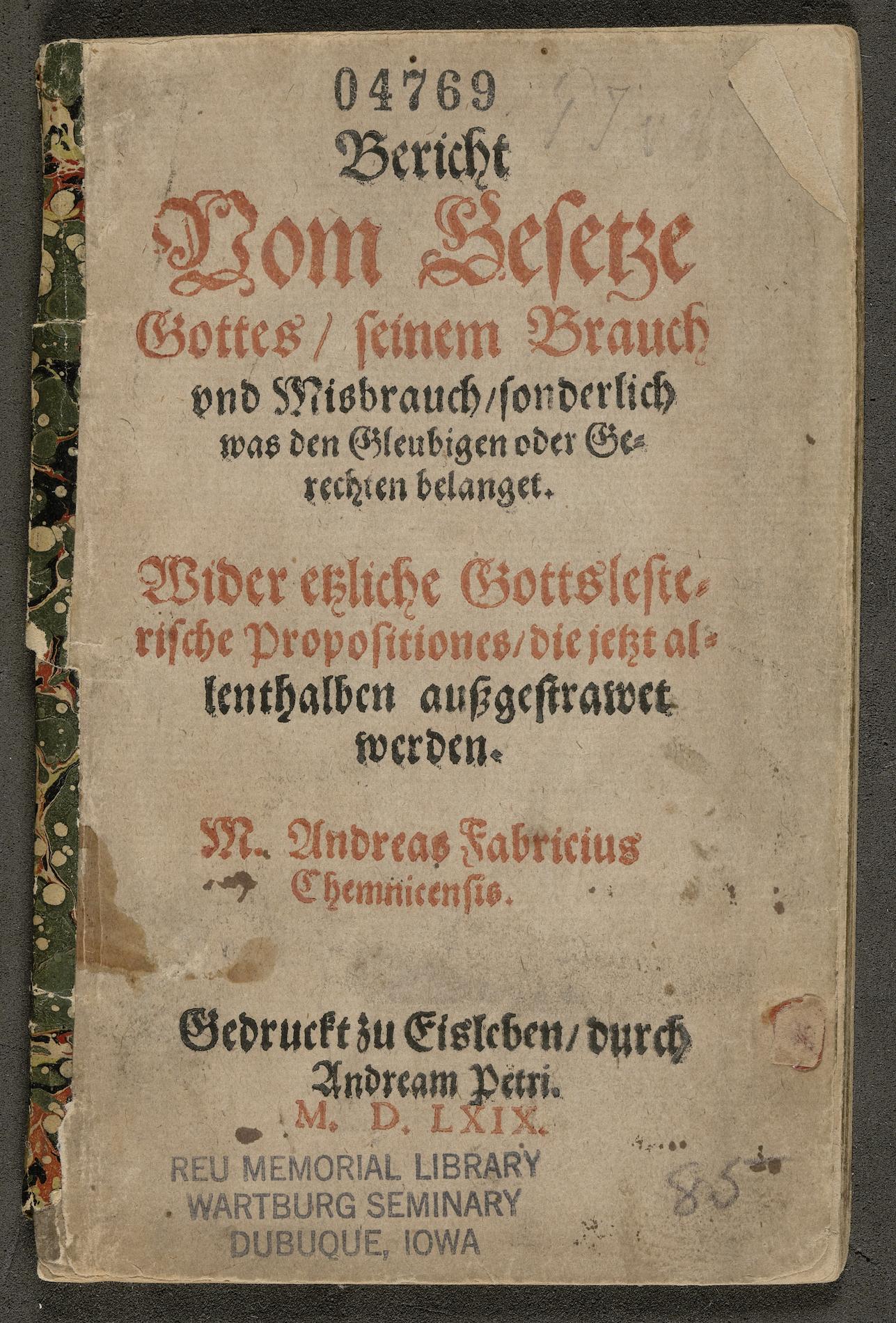
TextBericht vom Gesetze Gottes, seinem Brauch vnd Misbrauch, sonderlich was den Gleubigen oder Gerechten belanget : Wider etzliche gottslesterische Propositiones, die jetzt allenthalben aussgestrawet werden
Fabricius, Andreas, 1528-1577Summray: Andreas Fabricius was a Lutheran pastor and educator. This short tract is a discussion of biblical law and a defense of the doctrine of justification by faith. -
 Text
TextBericht vnd Trostschrifft : an alle die: so durch das falsch, heimlich Schreiben, schreien vnd affterreden, etlicher meiner Feinde, als solt ich von der Rechtfertigung des Glaubens, nicht recht halten vnd leren, geergert, oder betrübet worden sein
Osiander, Andreas, 1498-1552Summary: Short tract by Andreas Osiander in defense of his view of justification. -
 Text
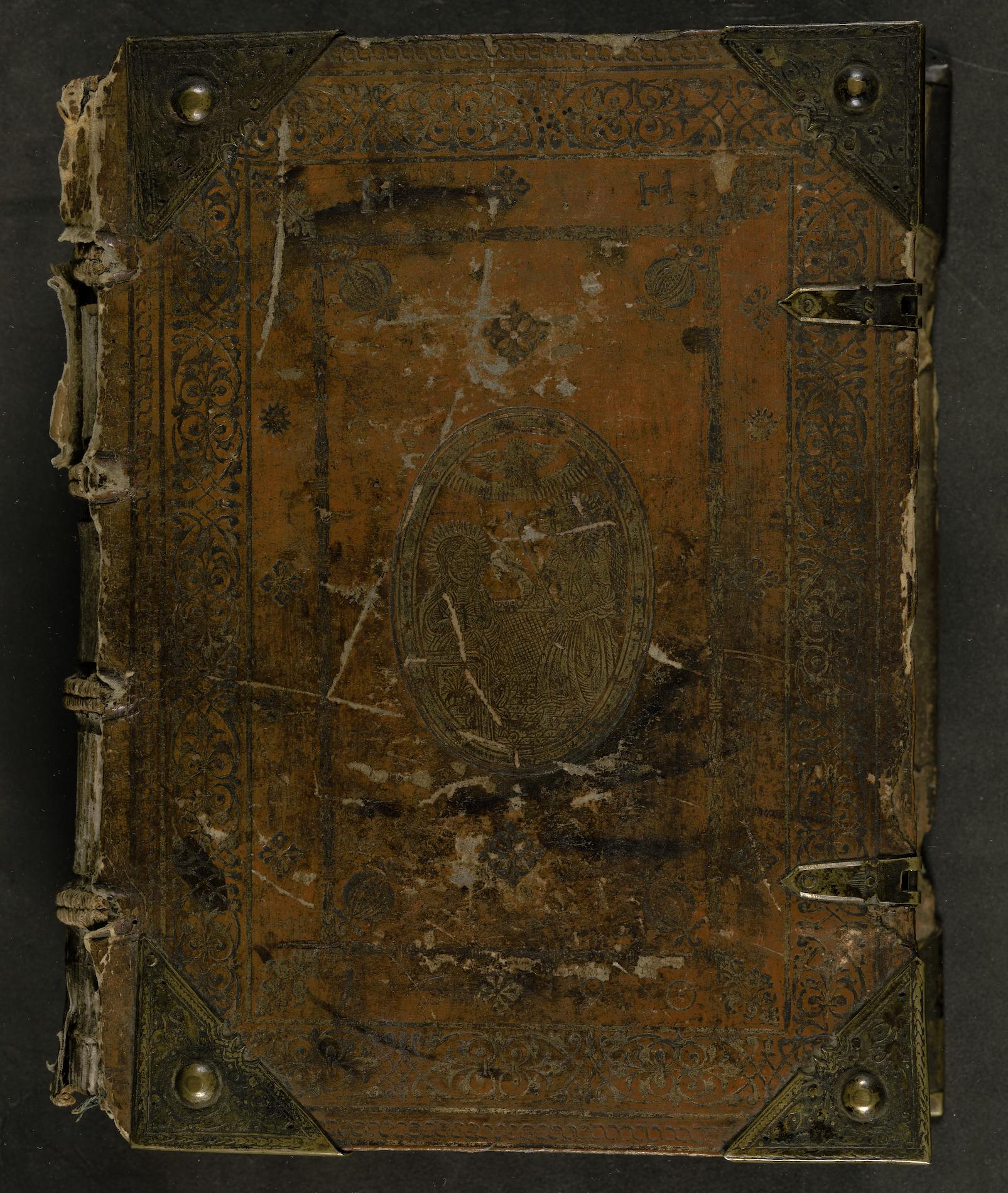
TextAuslegunge der Episteln vn[d] Euangelien von der heyligen drey Königefest bis auff Ostern
Luther, Martin, 1483-1546Summary: This is the second printing of Luther's Lenten Postils separate from other sermon collections. Kohl of Regensburg had issued the first printing the previous year. Of interest is the large initial on page a3a. -
 Text
TextAuslegung der Episteln vnd Euangelien vom Advent an, bis auff Ostern
Luther, Martin, 1483-1546Summary: Luther certainly had his problems with printers, as this edition of his "Winter Postil" testifies. Michael Lotter issued this new edition without Luther's approval. The editors took great labors, but found no favor in Wittenberg, and this edition was never reprinted.

Page 140 of 254
